
Losing a front tooth is more than just a dental issue. Every time you smile, talk or laugh, it is visible, and many people find their confidence drops almost overnight. The good news is it’s possible to replace a front tooth with a dental implant that looks and functions like a natural tooth. We'll cover how the treatment works, how it compares to other options, how much it costs in Antalya and what you can expect from start to finish.
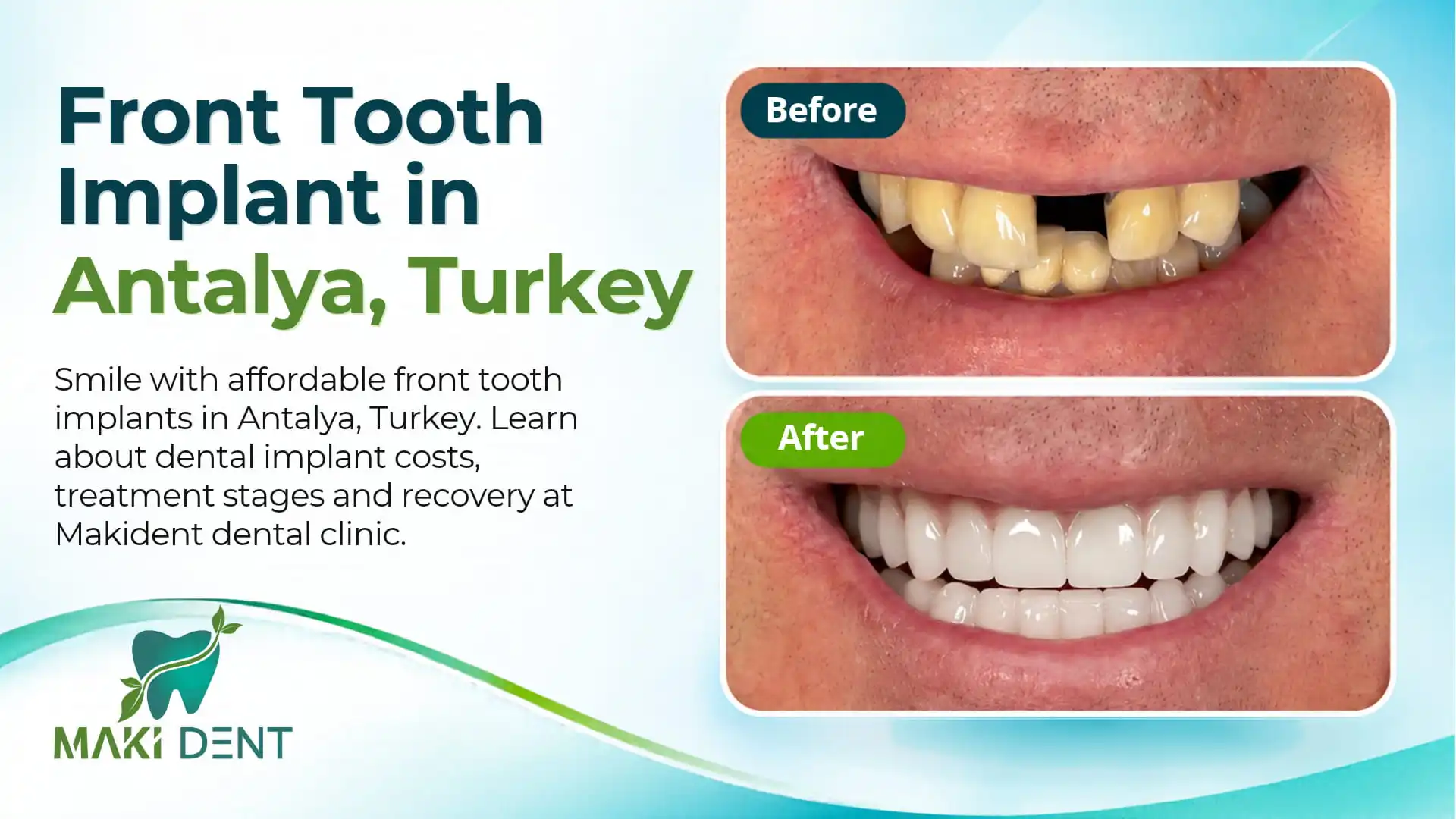
What is a front tooth dental implant?
Dental implants are tiny titanium posts that act as a substitute for the root of a missing tooth. It is placed in the jawbone, where it bonds with the bone over time, called osseointegration. After the implant has been established, a custom-made crown is placed on top. The crown is the visible portion, shaped and coloured to match the adjacent teeth.
Implants for front teeth work on the same basic principle as any other implant but require greater precision. Front teeth are in the “aesthetic zone", the area everyone looks at. The positioning of the implant, the contour of the gum line, and the colour of the crown are designed so the final result appears like it has always been yours.
Why replace a missing front tooth?
Some believe that if a gap is painless, it can just be left as it is. In fact, over time a missing front tooth can cause several problems:
- Appearance and confidence: A visible gap is noticeable in your smile and often causes people to shy away from photos or social situations.
- Speech: Your front teeth help you make certain sounds. A gap can lead to whistling or unclear speech.
- Bone loss: After a tooth root is lost, the surrounding bone slowly starts to shrink. It can change the shape of your face and gumline.
- Shifting teeth: Neighbouring teeth may shift into the gap, which can lead to bite problems later.
- Biting and chewing: Front teeth help cut food, and losing one makes some foods more difficult to eat.
An implant is the only option that replaces the root and the crown, which is why it helps protect the bone and the surrounding gum tissue.
Front tooth implant vs bridge vs denture
There are other options to replace a front tooth besides implants. Here’s a look at the three popular choices.
Dental implant: it replaces the root and the crown, it is independent of the neighbouring teeth and it helps to preserve the jawbone. It takes longer because of the recuperation period, but it is made to last many years with proper care.
Dental bridge: A bridge attaches to the teeth on either side of the space. This is quicker and usually only takes a couple of weeks but involves filing down the healthy neighbouring teeth to support the bridge. It also does not prevent bone loss at the site of the missing tooth.
Removable denture: A partial denture is the least expensive and non-surgical choice. But it can be bulky and can move when talking or eating and has to be taken out for cleaning. Many patients find it to be the least comfortable and least natural option for a front tooth.
For most healthy adults with good bone, an implant is the most natural and longest-lasting result. After an examination and an X-ray or 3D scan, your dentist can tell you which option is best for you.
What is the front tooth implant procedure?
The treatment is done in stages, and each stage has a purpose.
- Consultation and planning: Your dentist will examine your mouth and take digital X-rays or a 3D scan. They’ll also check your bone volume and gum health. This is also when the doctor will review your medical history and explain the treatment plan.
- If necessary, the tooth is removed. If the damaged tooth is still in place, it is carefully removed so as not to damage the surrounding bone. Sometimes the implant can be put in on the same day.
- Bone grafting if needed: If the bone is too thin, which is common in the front of the upper jaw, a bone graft may be needed to provide the implant with enough support.
- Implant placement: The titanium implant is inserted into the jawbone under local anaesthesia. The procedure often is quicker than people think.
- Healing: The implant will bond with the bone over a period of several weeks to a few months, depending on the person and the case.
- Abutment and crown: After the implant has stabilised, a connector – called an abutment – is attached and the final porcelain or zirconia crown is placed. Colour, shape and bite are tweaked until everything looks natural.
As the healing time is part of the process, many international patients plan two visits to Antalya: one for the implant placement and one for the final crown. Your clinic can explain which schedule suits your case.
Benefits of front tooth implants
- Looks and functions like a natural tooth
- Does not harm or rely on neighbouring teeth
- Supports a healthy jawbone and gum shape
- Stable for speech, eating and smiling
- It can last many years with proper care.
- No need to take off for cleaning
Front tooth implant before and after in Antalya, Turkey
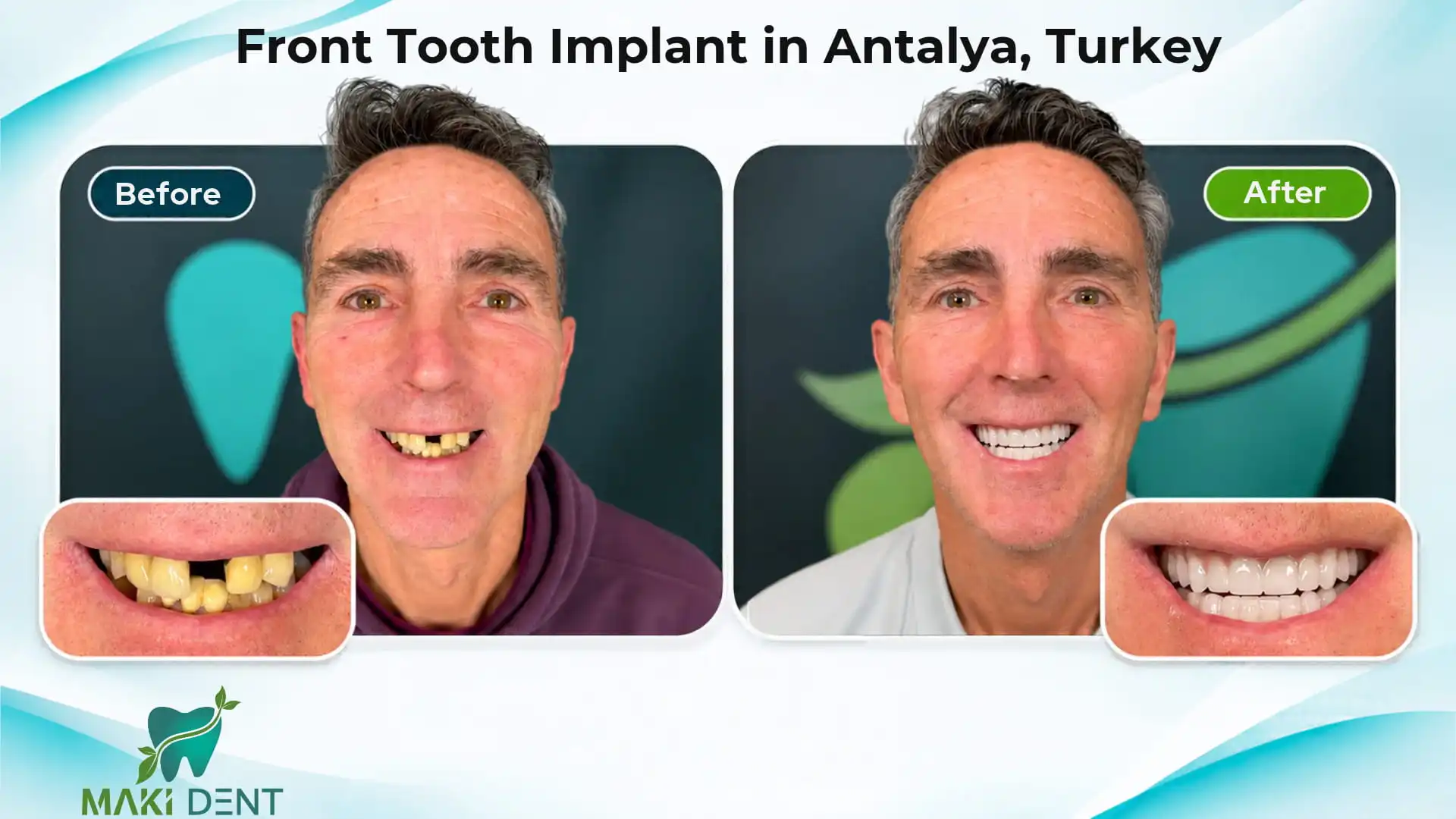
How much does a front tooth implant cost in Antalya?
Front tooth dental implant costs in Antalya, Turkey, typically range from £300 to £1,000+, compared to £2,400–£3,500+ in the UK and approximately €1,500–€4,000 in Western Europe.
Dental implant treatment in Turkey can often be considerably cheaper than in the UK, US or much of Western Europe, yet the materials and techniques can be comparable.
The final price depends on a number of things:
- Brand and type of implant used
- Material of the crown (porcelain-fused-to-metal or zirconia)
- Whether you need a tooth extraction, bone graft or sinus lift
- Whether a temporary tooth is needed during healing
- Complexity of the case in the aesthetic zone
Since no two mouths are alike, a fair price can only be quoted after an examination or review of your X-rays. Be wary of offers that are unrealistically cheap or do not specify the make of the implant used. At Makident you can email a photo of your smile and a panoramic x-ray and get a clear, itemised treatment plan before you fly.
How to care for a front tooth implant
An implant can't get a cavity, but the gum and bone around it can get inflamed if you don't keep it clean. Good habits make a lot of difference:
- Brush your teeth twice a day with a soft toothbrush and fluoride toothpaste.
- Clean between your teeth on a daily basis with interdental brushes or floss made for implants. A water flosser might help, too.
Don't bite hard objects like ice, pen caps or fingernails with the implant tooth.
- Do not smoke, especially during the healing period.
- Go for check-ups and professional cleanings at least twice a year.
- Follow your dentist's orders after the surgery, including taking medication and eating soft foods for the first days.
Early on, if you see bleeding, swelling, or any looseness around the implant, you should contact your dentist. Identifying small issues early makes them much easier to fix.
Front tooth dental implants at Makident in Antalya
We understand that a front tooth is a sensitive area both medically and emotionally at Makident. Our approach is to plan the treatment around the smile you want, from the first scan to the final crown, taking the time to understand it. We explain every step clearly so you know what is happening and why it is happening.
For foreign patients, we assist in organising the treatment schedule to ensure efficient use of your time in Antalya. You may also obtain a first opinion before travelling by sending your X-ray and a few pictures. If you are considering a front tooth implant, get in touch with Makident to book a consultation and receive a personal treatment plan.
FAQs
Most patients are surprised at how easy it is to do the procedure. You will receive a local anaesthetic to numb the area so you shouldn’t feel any pain during placement. Mild soreness, swelling or bruising for a few days afterward is normal and usually can be managed with the pain relief your dentist recommends..
Usually the gum settles in a week to two, but the implant takes longer to bond to the bone. This usually takes about two to six months, depending on the quality of the bone, if a graft was needed, and your overall health. Your dentist will check when it is time for the final
Yes. With careful planning, a good implant and a crown shaped and shaded to match your own teeth can be very difficult to tell apart from the real thing. It is very important for the health and contour of the gum around the crown. This is why front tooth cases require special care.
Yes, for the most part. While it heals, a temporary crown, a small bonded bridge or a removable temporary plate can fill the space so you never go without a front tooth. In some suitable cases a temporary crown may even be placed on the day of surgery. Your dentist will advise on the best option for your bite and healing plan.
Implant treatment is a common procedure and generally safe, but as with any surgery, there are some risks involved.
Possible complications include infection, slow healing, gum recession around the implant and, in rare cases, implant failure. Other risk factors include smoking, uncontrolled diabetes and poor oral hygiene.
Gum recession on the front of the mouth is also a concern, because it can expose the edge of the implant and affect the way you look. That’s another reason why careful planning and an experienced dentist are so important.
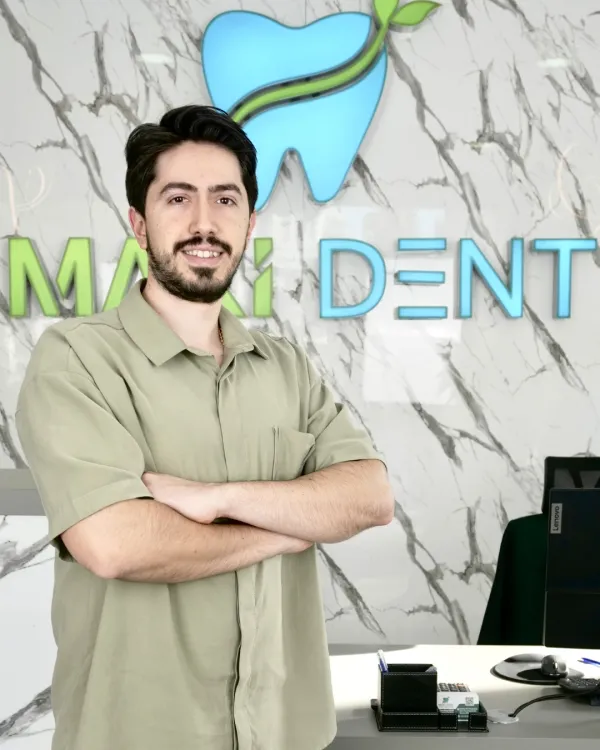
Dt. Emre Göktuğ
DENTIST · MAKIDENT DENTAL CLINIC · ANTALYA
Dt. Emre Göktuğ studied dentistry at Istanbul Okan University. His clinical work at Makident Dental Clinic in Antalya includes implant-supported prostheses and zirconia crowns.
Medically reviewed by Dt. Emre Göktuğ
Last reviewed on