
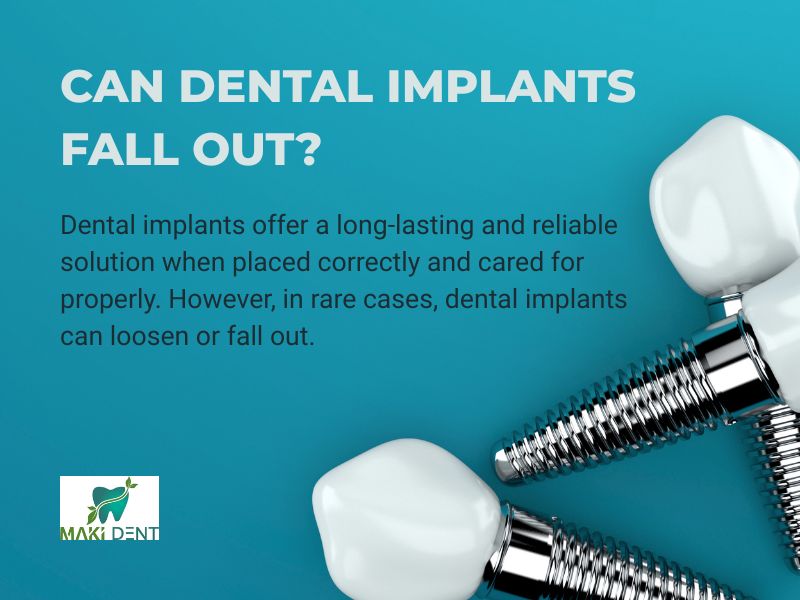
Dental implants offer a long-lasting and reliable solution when placed correctly and cared for properly. However, in rare cases, implants can loosen or fall out. Understanding the causes of this is important for both patients and dentists.
Factors that Cause Implant Loosening
1. Loosening of the Implant's Attachment
The crown or bridge placed on the implant is usually secured with screws. Over time, this screw can loosen due to chewing forces. This can cause the denture to loosen, even if there's no problem with the implant itself. This type of loosening is usually easily corrected by the dentist tightening the screw.
2. Failure of Osseointegration
For an implant to be successfully placed, it must fuse with the surrounding jawbone. If this process fails, the implant can loosen or fall out. This can be caused by factors such as insufficient bone density, infection, or excessive chewing forces.
3. Peri-implantitis and Other Infections
Peri-implantitis is the inflammation of the gum tissue around the implant. This condition develops as a result of bacterial buildup and can lead to bone loss. If left untreated, it can cause the implant to loosen and fall out. Regular oral hygiene and professional cleanings are important in preventing such infections.
4. Excessive Chewing Forces and Bruxism
Teeth clenching or excessive chewing forces put extra pressure on the implants. This can lead to loosening of the implant or damage to the surrounding tissues. The use of a night guard may be recommended for bruxism treatment.
5. Low-Quality Implant Materials
Implants of varying quality and price ranges are available on the market. Cheaper implants may be made of lower-quality materials, which can affect the implant's stability. Quality implant brands offer long-lasting and reliable results.
Tips for Maintaining Implant Health
Regular Dental Checkups: Visit your dentist every 3-6 months to have your implant checked. This is important for early detection of potential problems.
Practice Oral Hygiene: Brush your teeth at least twice a day using a soft-bristled toothbrush and low-abrasive toothpaste. Special cleaning tools, such as interdental brushes or water flossers, can be helpful in cleaning the areas around the implant.
Reduce Smoking and Alcohol Consumption: Smoking can negatively impact the healing process and increase the risk of peri-implantitis. Alcohol consumption can have similar effects.
Treat Bruxism: Wearing a nighttime dental tray can reduce teeth grinding and relieve pressure on the implant.
Eat a Balanced, Non-Hard Diet: Very hard or sticky foods can put excessive pressure on the implants. Avoid these foods.
Signs of Implant Loosening
- Pain or discomfort around the implant.
- Swelling, redness, or bleeding in the gums.
- Implant movement or loosening.
- Bad taste or bad odor in the mouth.
If you notice any of these symptoms, contact your dentist immediately. Early intervention can prevent the problem from leading to more serious complications.
Conclusion
Dental implants can last for many years without any problems with proper care and regular checkups. However, loosening or falling out of the implant is often a problem that can be detected early and treated. By following your dentist's recommendations and adopting healthy habits, you can extend the life of your implants and protect your oral health.
FAQs
My dental implant has fallen out, what should I do?
If your implant has fallen out, first take a deep breath. If you take the right steps without panicking, it's often possible to save the implant. First, do the following:
- Place the implant screw in a clean container and keep it safe. Don't throw it away.
- Do not try to put it back in yourself. This increases the risk of infection and can cause further damage.
- Gently rinse your mouth with warm salt water.
- Do not eat from the affected side.
- Call your dentist immediately and schedule an urgent appointment.
Is a dental implant falling out an emergency?
The sooner you intervene, the higher your chances of saving the implant. After examination, your dentist will decide whether the implant can be repositioned or replaced.
Can dental implants fail because of teeth grinding?
Yes, teeth grinding (bruxism) is a cause of dental implant failure. Chronic teeth grinding puts excessive off-axis pressure on the implant, which can lead to fracture of the ceramic crown, loosening of the internal screws, or incomplete bone integration. Over time, this excessive clenching can lead to bone loss around the implant or complete mechanical failure.
Can a loosened dental implant be saved?
A loosened crown, abutment (the connecting piece between the implant and the tooth), or screw can often be repaired or replaced. However, if the implant inside the bone is moving, the cause and the condition of the bone need to be evaluated by a dentist.
Can a dental implant fall out painlessly?
Yes. Especially the screw or crown on the implant can loosen without significant pain. Bone loss around the implant may also progress silently initially; therefore, movement of the implant, changes in bite, or gum problems should be taken seriously.
My implant fell out after two weeks, what could be the reason?
The part that fell out may not be the implant itself, but the healing cap or healing abutment. If the implant itself has moved, it may not have integrated with the bone as expected, and a dental check-up is necessary.
Can I put the dental implant screw back in place myself?
No, do not attempt to put the implant screw back in place yourself, otherwise you may damage the implant connection and introduce bacteria to the area. Keeping the loosened part and showing the implant area to your dentist is the safest approach.