
Having pearly white teeth is an aesthetic goal for many people. However, black spots or dark lines that appear on the surface of the teeth, especially near the gum line, can affect this appearance. This is not only a cosmetic concern. In many cases, it is linked to a complex biochemical process inside the mouth. In this article, we explain the possible causes of black marks on teeth, treatment options, prevention methods, and when professional dental advice is needed.
What exactly are black marks on teeth?
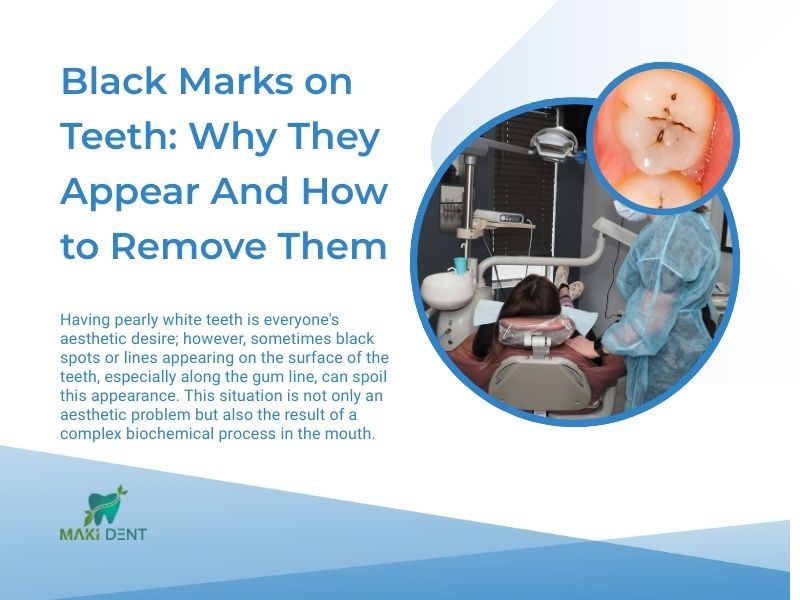
Black marks on teeth are usually seen as a dark pigmented layer that follows the gum line and sticks firmly to the tooth surface. These marks are different from regular dental plaque. They are dense, strongly attached deposits that usually do not damage or erode the tooth surface. In many cases, they are more common on the inner surfaces of the lower teeth near the tongue, because this area is close to the salivary glands.
What should not come to mind when thinking of black marks?
It is important to make a clear distinction. There are two main types of black discoloration that may affect teeth.
Internal marks
These come from the inner structure of the tooth. They often appear as a grey, dark brown, or blackish tone. Possible causes include dental trauma, the use of certain antibiotics such as tetracycline during childhood, or genetic factors.
External marks
This is the type discussed in this article and the one more commonly seen in daily practice. These stains form when dark-coloured substances accumulate on the outer enamel surface of the tooth.
What are the symptoms of black marks on teeth?
Black marks on teeth usually appear as dark pigmentation on the tooth surface. Although they can be seen at any age, they are often more common in children. The most noticeable signs include the following:
Appearance and shape
Black marks and lines
They often begin as small black dots or broken dark lines on the tooth surface.
Following the gum line
One of the most typical features is that these stains follow a path parallel to the gum line. They may appear as a thin or broad band.
Continuous lines
As the staining becomes more visible, the small dots may join together and form a continuous black line around the neck of the tooth.
Locations
Neck of the tooth
These stains most often collect in the lower third of the tooth, also called the cervical third, which is closest to the gums.
Inner surfaces of lower front teeth
The most common site is the inner surface of the lower front teeth facing the tongue. This is because saliva and the nearby salivary glands may contribute to stain formation.
Both inner and outer surfaces
Black marks may appear on both the cheek-facing outer surfaces and the tongue-facing inner surfaces of the teeth.
Physical characteristics
Hard and sticky structure
These marks usually adhere very firmly to the tooth surface. They are not easily removed with regular tooth brushing.
Tooth surface is usually intact
Unlike tooth decay, black surface stains do not usually create holes, soft areas, or structural damage. After professional removal, the enamel underneath is often found to be smooth, shiny, and healthy.
Grading according to severity
- Grade 1: Thin lines or dots parallel to the gum line, not fully connected.
- Grade 2: Clearly visible continuous lines extending toward the lower half of the tooth surface.
- Grade 3: Heavy staining covering more than half of the tooth surface.
Tendency to recur
Even after professional cleaning, these marks may return in the same areas within a few months. In many cases, recurrence can happen in about two months.
Pain
Black marks on teeth usually do not cause pain or sensitivity. The main concern is generally their appearance.
What makes black markings appear on teeth?
There are several common reasons why black marks may develop on teeth.
The main reason is the interaction between bacteria and iron
One of the most common causes is the activity of chromogenic bacteria naturally found in the mouth. These bacteria produce hydrogen sulfide. When this substance reacts with iron present in saliva or gingival fluid, it can form ferric sulfide, a black compound that does not dissolve in water. This material sticks to the tooth surface and causes dark marks.
Diet and nutritional supplements
Some external substances may also contribute to black marks on teeth:
- Iron supplements: Liquid iron syrups used by children or iron supplements taken during pregnancy may increase iron levels in the mouth and encourage stain formation.
- Foods rich in iron: Foods such as spinach, broccoli, beans, and some fruits may provide iron that supports this pigmentation process.
- Tannins: Tea, coffee, red wine, and some fruits contain tannins that attach to the pellicle layer on the tooth surface and can darken the teeth over time.
Drugs and oral care products
Some medications and hygiene products may also contribute to tooth discoloration:
- Chlorhexidine: Mouthwashes containing chlorhexidine, often used for gum disease, may lead to brown or black staining on the teeth.
- Antibiotics: Certain antibiotics, including linezolid, amoxicillin, and tetracycline, may be associated with external discoloration.
Dental injuries and filling materials
Not all dark marks come from the outside. Some can come from changes within the tooth:
- Trauma: A tooth that has received a strong impact may bleed internally. The breakdown of blood pigments can darken the tooth from within.
- Amalgam fillings: Older silver-coloured amalgam fillings may corrode over time and create grey-black discoloration in the tooth or nearby tissue.
Other health and environmental factors
- Tobacco use: Tar and nicotine from cigarettes and other tobacco products can penetrate rough areas of the teeth and leave stubborn black or dark brown stains.
- Industrial exposure: People exposed to dust containing iron, manganese, or silver in certain work environments may also develop black tooth stains.
What are the different ways to treat black tooth marks?
Treatment depends on whether the discoloration is external or internal and how severe it is.
At the clinic
- Dental scaling and polishing: Dentists can remove stubborn stains using professional instruments and polishing pastes.
- Microabrasion: This method uses mild acids and abrasives to gently remove very resistant superficial stains from enamel.
- Laser and phototherapy: Some modern dental approaches suggest that laser-assisted methods and photodynamic therapy may help reduce both staining and bacterial activity.
Home care and protective measures
- Toothpastes containing mild oxidising agents, enzymes, or polishing ingredients may help reduce external staining. However, highly abrasive toothpaste should not be used too often.
- Reducing the intake of tea, coffee, red wine, smoking, and iron-rich foods may help slow down stain formation.
- Supporting the bacterial balance of the mouth with probiotics or lactoferrin-based products may help reduce recurrence in some cases.
- A paste made from a teaspoon of baking soda and a few drops of lemon juice is sometimes used once a week to reduce surface stains. However, excessive use may harm enamel.
- Oil pulling with coconut oil for 15 to 20 minutes may help reduce plaque formation because of its antimicrobial properties, although it is more useful for prevention than removal of old stains.
- Diluted apple cider vinegar is sometimes used as a home remedy, but because it is acidic, it should be used carefully and not too often.
Ways to treat internal marks
If the discoloration is intrinsic or the tooth structure has been affected, the following cosmetic options may be considered:
- Tooth whitening: May help in some mild intrinsic discoloration cases.
- Composite bonding and veneers: These cosmetic restorations can hide permanent discoloration on the visible tooth surface.
- Crowns: If a tooth is severely discoloured or structurally damaged, a full crown may be the most suitable option.
When to go to the dentist
Home care is not always enough. You should see a dentist promptly in the following situations:
- Pain or sensitivity: If the stained tooth hurts or becomes sensitive to hot, cold, or sweet foods, this may indicate decay or another dental issue.
- The mark is getting bigger: If the stain spreads quickly or becomes more noticeable.
- Gum problems: If you have gum bleeding, swelling, redness, or pain.
- Visible changes in the tooth: Such as cracks, chips, pits, or cavities.
- No improvement after 1 to 2 weeks: If the mark does not change despite consistent oral hygiene and simple care measures.
- Other symptoms: Such as bad breath or swallowing difficulty together with the dark area.
How to prevent black marks on teeth
The following steps may help reduce the risk of black marks forming or recurring:
- Brush your teeth regularly: Brush at least twice a day with a fluoride toothpaste.
- Floss daily: Cleaning between the teeth helps remove plaque in areas a toothbrush cannot reach.
- Replace your toothbrush regularly: A toothbrush should usually be replaced every three to four months. An electric toothbrush may improve cleaning efficiency.
- Use antimicrobial mouthwash carefully: A dentist may recommend it in some cases, but long-term chlorhexidine use may itself cause staining.
- Limit stain-causing foods and drinks: Coffee, tea, red wine, blueberries, tomato-based sauces, and curry may darken the teeth. Rinsing with water after consuming them may help.
- Be cautious with iron supplements: Especially in children, liquid iron products may contribute to stain formation.
- Stop using tobacco products: Smoking and chewing tobacco are common causes of dark stains on teeth.
- Have regular dental check-ups: Professional cleaning every six months is important because these marks often do not come off with routine home brushing alone.
- Ask about medication-related staining: If the marks appeared after certain medicines, speak to your dentist about possible alternatives or management options.
F.A.Q.
Do black marks always mean decay?
No, not always. In many cases, black marks are only surface stains and do not mean the tooth is decayed. However, if a dark area grows larger over time or is associated with pain or a cavity, it may indicate decay. A dental examination is needed for a proper diagnosis.
There are black marks on my child's teeth. Is this normal?
This is relatively common in children. Chromogenic bacteria are often responsible. These bacteria react with substances such as iron in saliva and create dark pigmentation. Although this condition is usually not harmful, a dentist should still evaluate it.
Can tartar turn black?
Yes. Dental calculus usually starts off yellowish or whitish, but over time it can absorb pigments from tea, coffee, and tobacco. This may cause it to look dark brown or black, especially along the gum line.
Does teeth whitening remove black spots?
Professional whitening may help with some light stains, but black surface deposits and tartar usually need professional scaling and polishing first. Whitening alone is not effective for hardened black tartar.
Do pregnant women get black marks on their teeth?
Hormonal changes during pregnancy may make the gums more sensitive and more likely to bleed. Morning sickness, acid exposure after vomiting, and changes in oral hygiene habits may also contribute to tooth staining or gum line discoloration.
Can black marks appear under the enamel?
Yes. A dark shadow under apparently intact enamel may be a sign of decay in the dentine layer beneath the surface. This situation should be assessed by a dentist.
Do braces cause black spots?
Braces do not directly cause black marks, but they can make cleaning more difficult. If plaque is allowed to build up around brackets and wires, discoloration and even decay may develop. Good oral hygiene is especially important during orthodontic treatment.